Manual scoring breaks as soon as volume grows. Automating it means every lead gets scored the same way, instantly, and sales is alerted when a lead becomes hot.
1. Make sure the data exists
Automation needs fields: industry, size, title, location, plus tracked actions (opens, clicks, visits, replies, form fills). Enrich missing fields; see B2B lead enrichment.
2. Write rules in your CRM or marketing tool
- IF industry = core niche THEN +20
- IF title contains Owner, Founder, Director THEN +15
- IF visited pricing page THEN +10
- IF email bounced THEN −50
- IF no activity 30 days THEN −10 (decay)
3. Add score decay
Engagement fades. Subtract points over time so old activity doesn't keep a lead hot forever.
4. Trigger alerts and routing
When a lead crosses your threshold, create a task, notify the owner and assign it (round robin or by territory). See thresholds.
5. Calibrate monthly
Compare scores to outcomes. Raise weights that predict wins, lower those that don't.
6. Consider predictive scoring
Once you have hundreds of closed deals, machine-learning scoring can find patterns humans miss. See AI lead scoring.
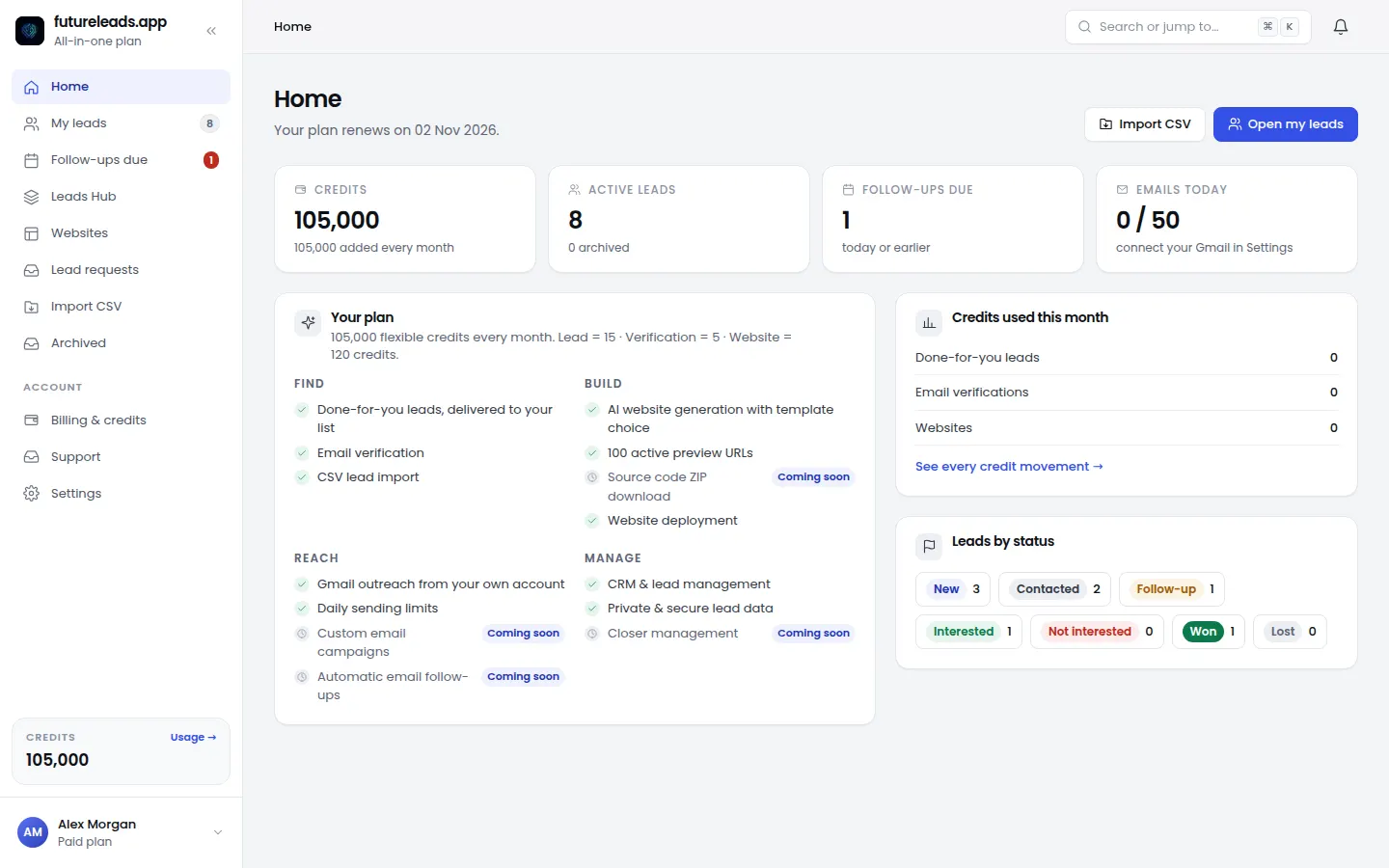
Track every lead's status and next step automatically in the CRM, with follow-ups due on your dashboard.
Start free — no card neededor claim up to 3,000 FREE credits with a paid planCRM and automation in every package:
Basic
$9.99/month
11,500 credits a month
+ 1,000 FREE credits
- About 261 done-for-you leads
- or 88 AI website previews
- All features included
Pro
$39/month
50,000 credits a month
+ 1,500 FREE credits
- About 1,136 done-for-you leads
- or 384 AI website previews
- All features included
Premium
$79/month
105,000 credits a month
+ 3,000 FREE credits
- About 2,386 done-for-you leads
- or 807 AI website previews
- All features included
Frequently asked questions
Can lead scoring be automated?
Yes. Most CRMs and marketing automation tools let you set rules that add or subtract points based on data and behaviour, and trigger alerts when thresholds are reached.
What is score decay?
Gradually reducing engagement points over time so a lead's score reflects recent interest rather than old activity.