Most web designers don't have a skills problem. They have a pipeline problem. One month is busy, the next is empty, and every new client comes from a referral you couldn't plan for. This guide shows you how to find web design clients with a system you can run every week, even if nobody knows your name yet.
1. Pick one niche and one area
"Small businesses" is not a target. "Roofers in Texas" is. A narrow niche lets you reuse the same pitch, the same examples and the same website structure, so every new prospect costs you less time.
- Choose trades with high job values: roofers, dentists, HVAC, plumbers, law firms, med spas.
- Prefer niches where customers search online before calling ("emergency plumber near me").
- Start with one region so your examples feel local and relevant.
2. Build a list of businesses that actually need you
The best prospects are businesses with no website, a broken website or a site that looks ten years old. They already lose customers every day, so the conversation is about money, not design taste.
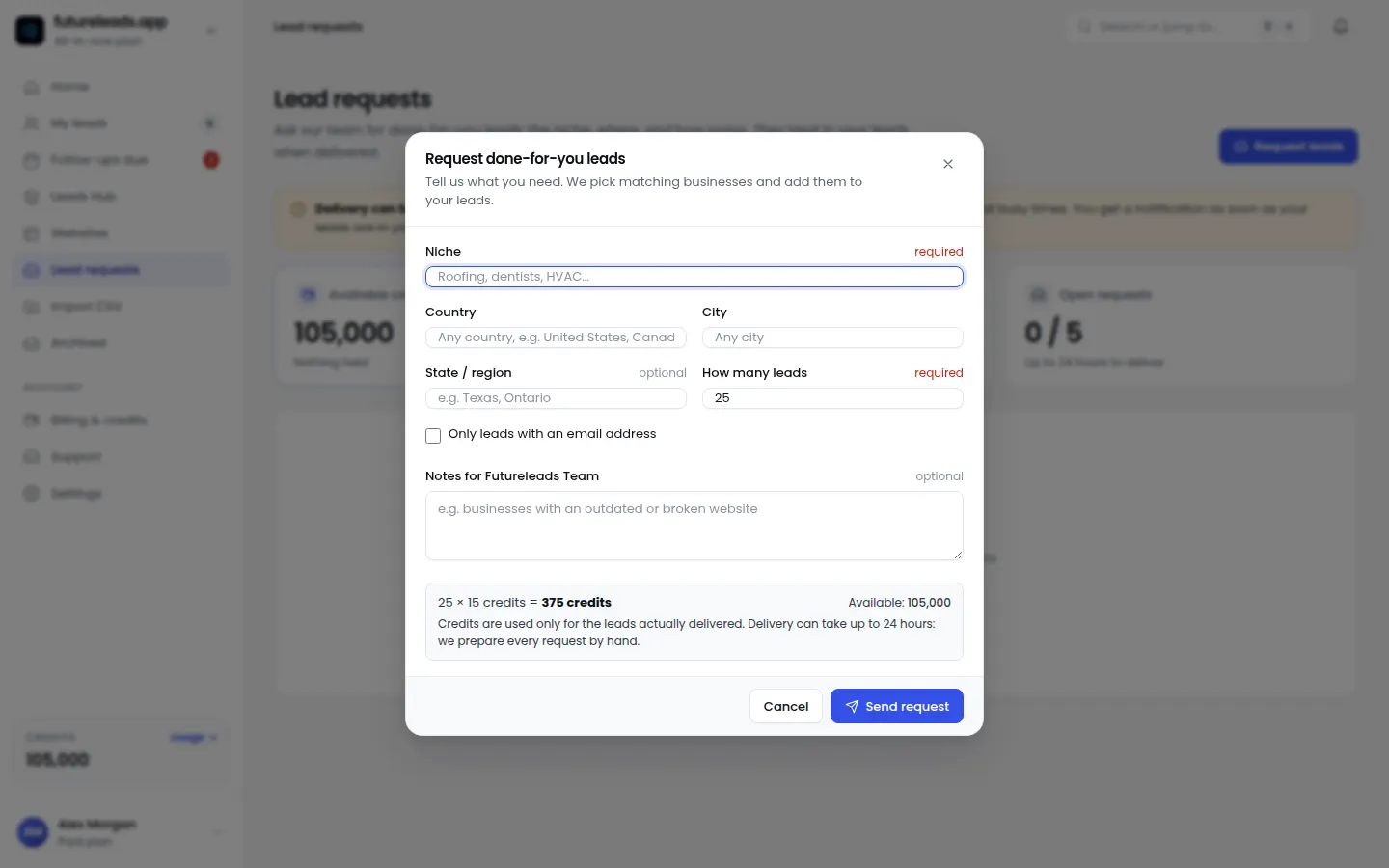
You can build that list by hand from Google Maps, import a CSV you already have, or request a done-for-you list. In Futureleads.app you choose the niche, country, state and city, and checked leads land directly in your CRM.
3. Qualify each lead in 30 seconds
Before you write a single email, check three things: is the website down, is it mobile-friendly, and does it have a clear way to call or book? If two of three fail, it's a strong lead. Write the problem down; it becomes the first line of your email.
4. Show, don't tell: send a website preview
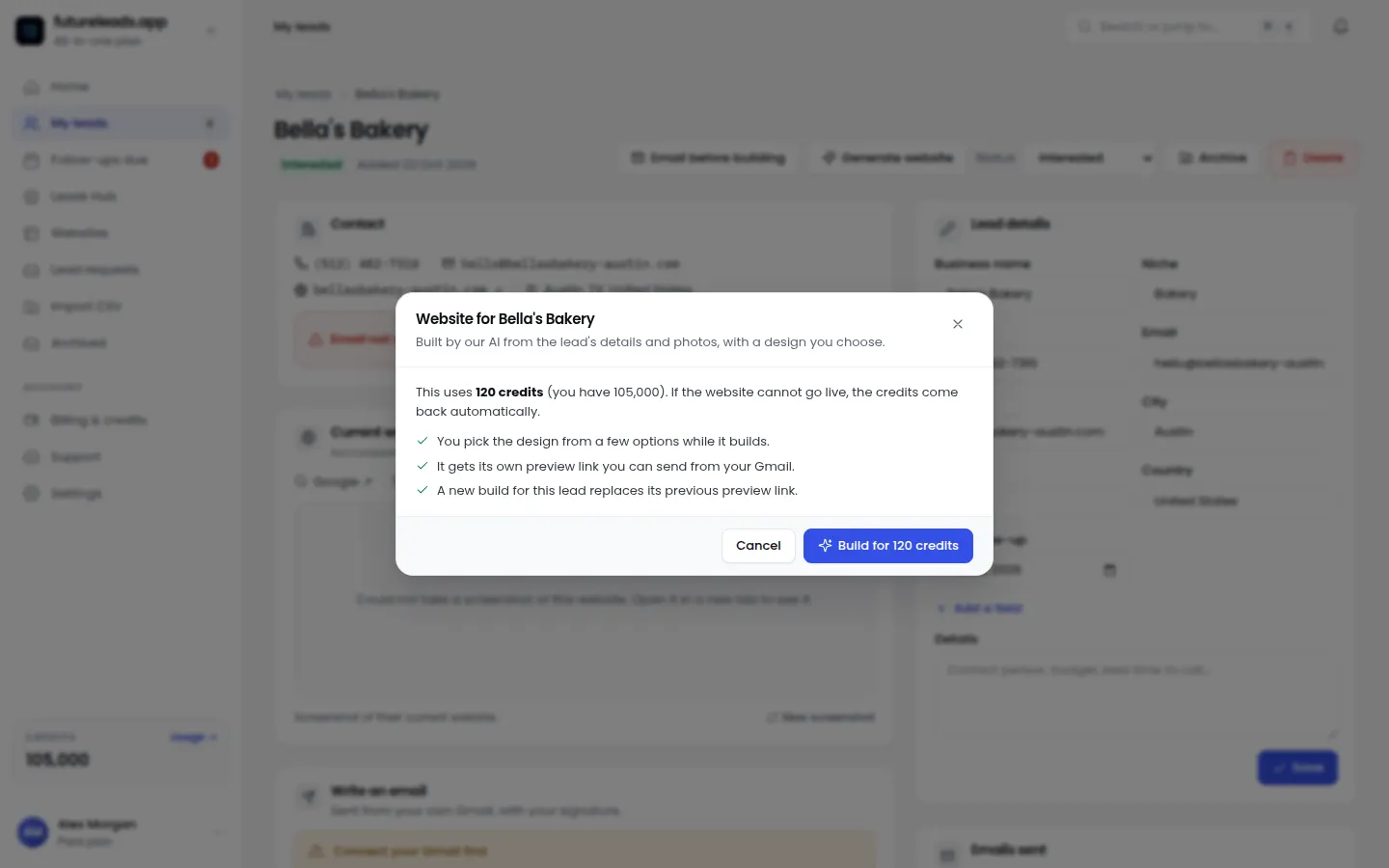
Cold emails that say "I can build you a better website" get ignored. Emails that say "I already built a new version of your website, here's the link" get opened, because the owner wants to see it. A live preview removes the imagination step.
Read our full guide on selling websites to local businesses for the exact pitch structure.
5. Email from your own inbox, then follow up
Send from a real Gmail address with your name and signature. Keep the first email under 90 words, include the preview link, and ask one simple question. Then follow up two or three times: most replies come after the second message.
Use our cold email template for web designers and the follow-up sequence to save hours.
6. Track everything in one place
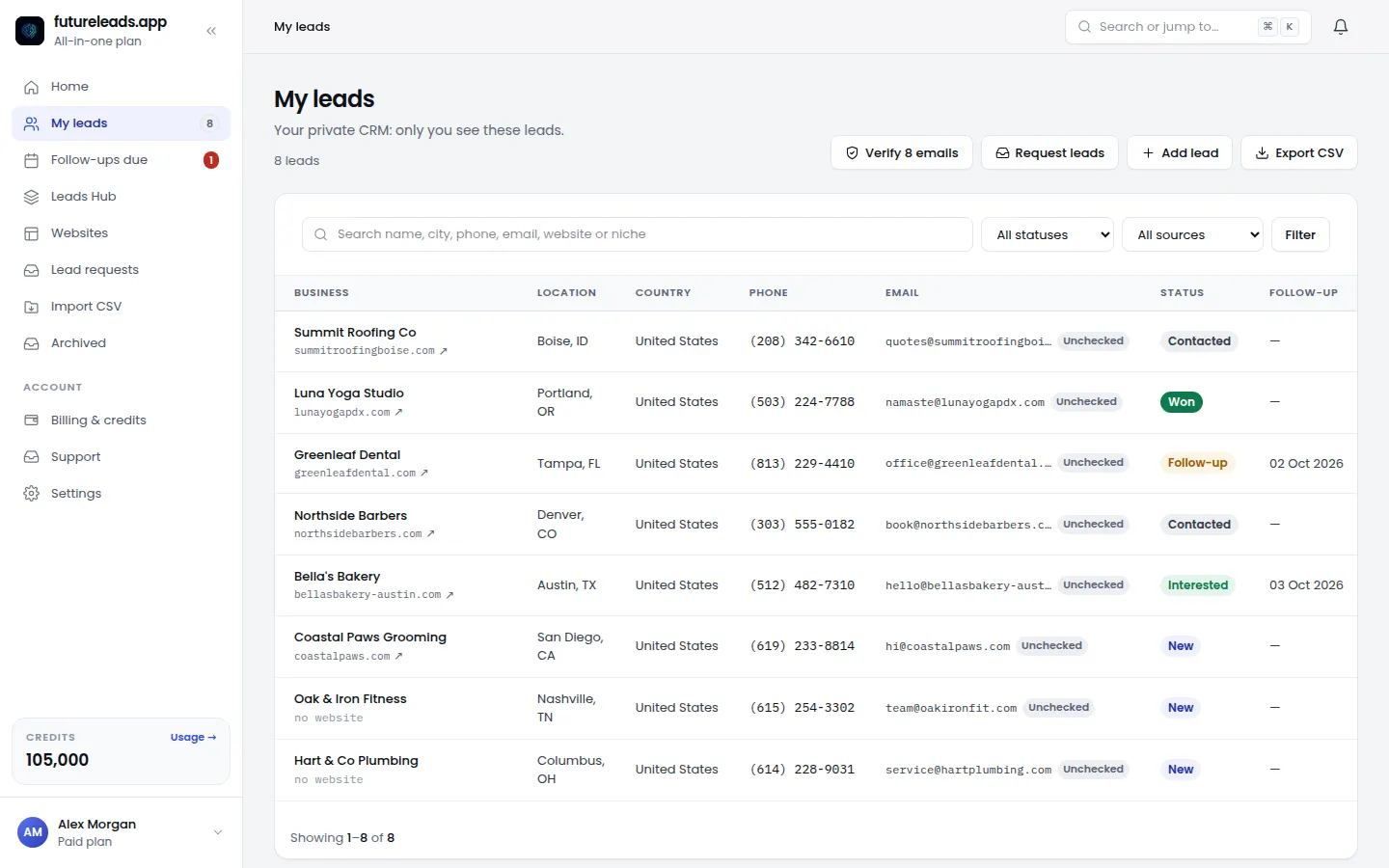
A spreadsheet works until you have 50 leads. After that you forget who replied and who needs a follow-up. Use a CRM with statuses (new, contacted, interested, won) and follow-up dates so nothing slips.
The weekly routine
- Monday: add 50 new leads in one niche.
- Tuesday: qualify them and write one-line notes.
- Wednesday: generate previews for the 10 best.
- Thursday: send emails from your Gmail.
- Friday: follow up and call the warm ones.
Start your first week with 1,000 FREE credits: enough for about 66 done-for-you leads or 8 website previews.
Start free — no card neededor claim up to 3,000 FREE credits with a paid planPick a package: every feature is included in each, paid plans add FREE bonus credits every month, or start free with no card.
Basic
$9.99/month
11,500 credits a month
+ 1,000 FREE credits
- About 261 done-for-you leads
- or 88 AI website previews
- All features included
Pro
$39/month
50,000 credits a month
+ 1,500 FREE credits
- About 1,136 done-for-you leads
- or 384 AI website previews
- All features included
Premium
$79/month
105,000 credits a month
+ 3,000 FREE credits
- About 2,386 done-for-you leads
- or 807 AI website previews
- All features included
Frequently asked questions
What is the fastest way to find web design clients?
Target one niche in one area, find businesses with no website or an outdated one, and send them a live preview of a new site with a short email. Showing the result first gets far more replies than offering a service.
Do I need a portfolio to find clients?
Not really. A preview built for the prospect's own business works better than a portfolio, because it shows exactly what they would get.
How many leads should I contact per week?
Start with 30 to 50 qualified leads per week and follow up with each two or three times. Consistency matters more than volume.