A web design agency business plan is a one-page roadmap that answers five questions: who you sell to, what you sell, how much you charge, how you find clients, and what your numbers need to look like. Most freelancers skip it, then wonder why they take any job that shows up. Writing it down takes an afternoon and changes how you make every decision after.
This guide gives you the plan itself, section by section, with templates and checklists you can copy today. It is written for freelancers and small agencies selling websites to local businesses. If you have not picked a niche yet, start with 15 web design niche ideas that actually pay and come back here.
1. Start with your niche and your buyer
"Small businesses" is not a niche. "Dentists," "roofers," "med spas," and "electricians" are. When you write your business plan for one type of local business, everything gets easier: your portfolio, your proposal, your pricing, and your cold emails all speak the buyer's language. Pick one niche for your first six months, ideally one where owners are busy on job sites and outsource marketing.
- Who: e.g. independent roofers and home service companies in one region
- Problem: outdated site, no mobile version, no lead forms, invisible on local search
- Buyer: the owner, usually reachable by phone, decides fast
- Why you: you show them a preview of their own site before they pay a cent
If you are starting from zero experience, read how to start a web design business with no experience first, then fill in this section of your plan.
2. Define your offer as packages, not hours
Clients do not buy "20 hours of design." They buy a result: a site that loads fast, works on phones, and brings calls. In your plan, write out three tiers so buyers can choose instead of negotiating a single price. For help setting the numbers, use how to price a website for a small business and web design pricing packages that close local clients.
A simple structure that works for local businesses:
- Starter: a clean 3-5 page site, mobile-friendly, contact form, fast turnaround
- Growth: everything in Starter plus extra pages, booking or quote forms, and basic local SEO setup
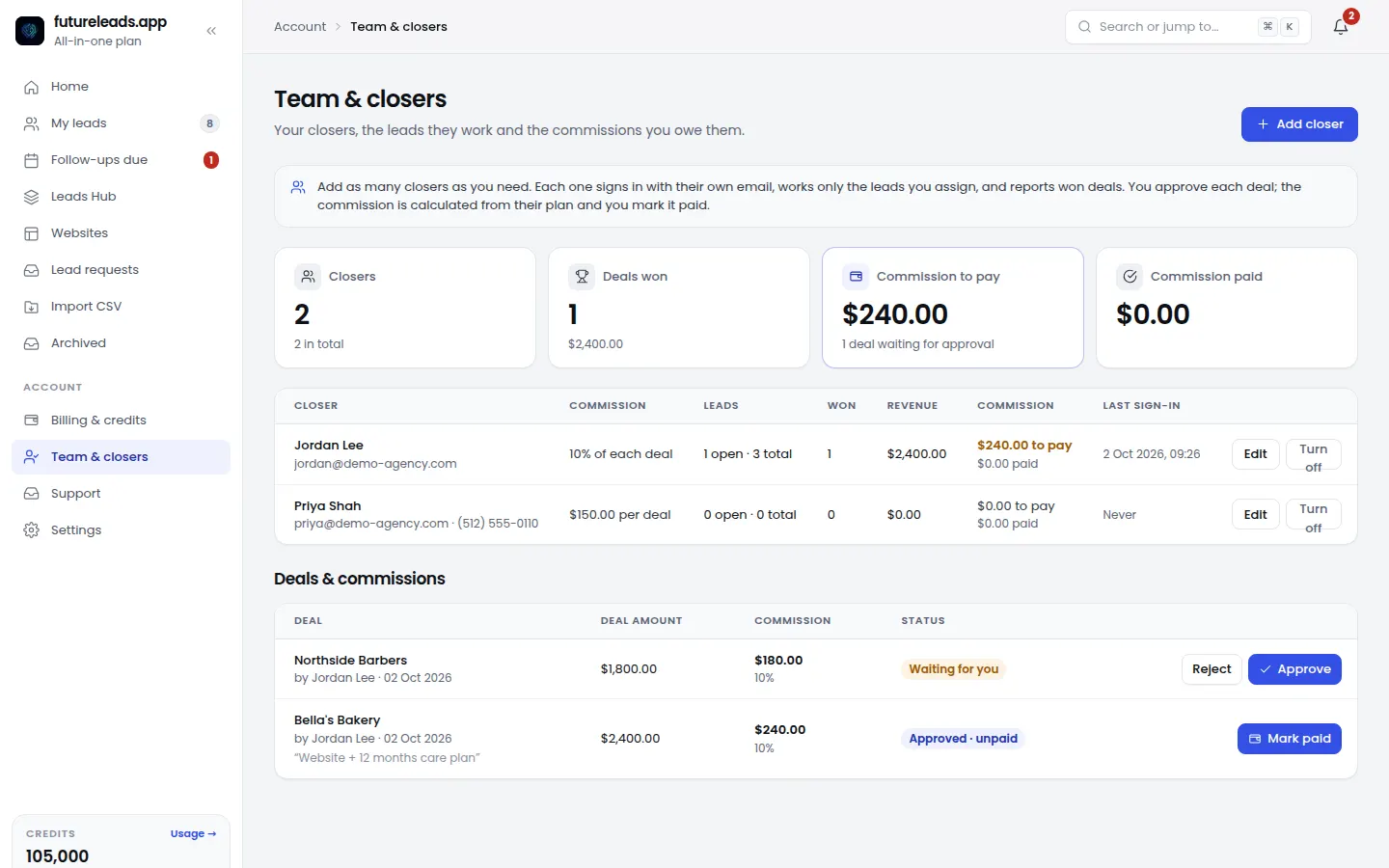
- Care: hosting, updates, small changes, and monthly reporting sold as an ongoing maintenance plan
The Care tier matters more than most new agencies realize. It turns one project into predictable monthly revenue. Compare options in website maintenance packages for small business and set your rate with how much to charge for website maintenance.
3. Work backwards from your income goal
Your business plan needs real numbers, not wishes. Do this math in five minutes:
- Write your monthly income goal, for example $5,000
- Decide how much comes from projects vs. monthly maintenance, e.g. two $2,000 projects plus $1,000 in maintenance retainers
- Estimate your close rate conservatively, say one in five leads becomes a client
- Divide: two clients a month at a 20% close rate means about ten real conversations a month
- Now the key number: how many businesses you must contact weekly to create those ten conversations
That last number is your weekly outreach target. Write it into the plan and track it every week. Everything in section 5 exists to hit it.
4. Plan your services beyond the build
A one-off website sale keeps you on a project treadmill. Your plan should list the recurring services you will offer from day one: hosting, updates, edits, backups, and simple reporting. Local owners value not having to think about their site. Package these as a flat monthly plan rather than hourly work, so you get predictable income and they get predictable costs.
Also plan what you will not do. Say no to logo design, print work, or social media management in the early months unless you can charge properly for it. Focus compounds.
5. Choose your lead generation channels
This is the section most business plans leave vague. Be specific: name two or three channels and the weekly actions for each. For local web design, the most reliable starting mix is:
- Direct outreach: cold email and cold calls to businesses with weak or missing websites
- Local networking: one chamber of commerce or trade group event per month
- Referrals: a simple ask after every finished project
- Content: a short monthly post or case note for local credibility
For a deeper breakdown of each option, see where to find web design clients: 7 channels that actually work and our guide to lead generation for web designers. Pick two channels, not six, and do them weekly.
Not sure who to contact first? Start a free Futureleads.app account (no card needed) and search your niche and city to see local businesses with no website or a broken one, complete with phone and email.
Find businesses that need a website — freeor claim up to 3,000 FREE credits with a paid plan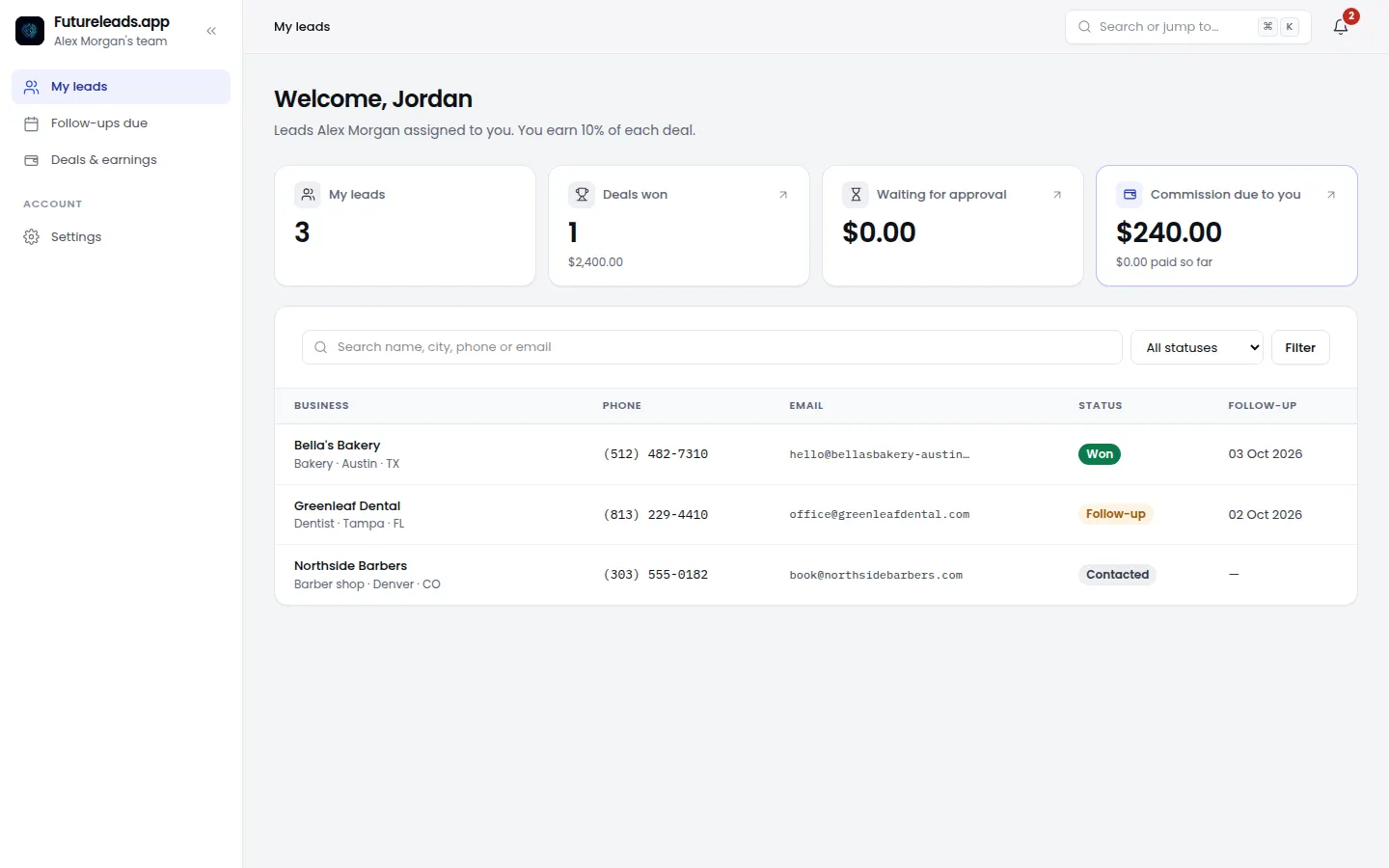
6. Build your outreach system and scripts
Outreach only works when it is systematic. Your plan should specify the exact sequence a new lead goes through:
- Find businesses in your niche and city with no site, a slow site, or a site that is not mobile-friendly. Futureleads.app does this search for you and lists the specific problems found, plus phone and email.
- Send a short, personalized cold email from your own account. Steal one from our web design cold email template and pair it with subject lines from cold email subject lines for web design.
- Follow up two or three times over two weeks. Most replies come from follow-ups, not the first email. Use the templates in cold email follow-up for web designers or the proven sequence in follow up email after no response from client.
- Call the ones that open or reply. Use the script in cold calling script for web design clients; if you get voicemail, the voicemail script for cold calling covers you.
- Log every contact in a simple CRM with a status, a note, and a next follow-up date.
The biggest objection you will hear is "how do I know it will look good?" Answer it before they ask. With Futureleads.app you can build an AI homepage preview for the business in minutes and send a link or QR code before any payment. Seeing their own name on a modern homepage converts skeptics far better than a portfolio does. For the full sales conversation, read how to sell websites to local businesses.
7. Plan your sales process
Your business plan should describe what happens after a lead says "maybe." A repeatable process looks like this:
- Discovery call: ask about their customers, what they want the site to do, and what frustrates them now. Use the questions in our web design client questionnaire.
- Quick audit: show them the specific problems on their current site. Our website audit checklist and signs a business needs a new website give you the talking points.
- Proposal: send a short, clear proposal within 24 hours. Copy the structure from website design proposal template.
- Follow up: proposals die without follow-up. Use the steps in how to follow up after sending a proposal.
- Close, invoice, and start the build.
Write your own average timeline into the plan, for example "lead to close in 7-14 days." If deals stall for weeks, the fix is usually faster proposals and scheduled follow-ups, not lower prices.
8. Set your operations and tools checklist
Keep this section short but concrete. Your plan should list:
- Lead sourcing: daily search of local businesses with website problems
- Outreach: email accounts (warmed up properly — see how to warm up a new email domain), phone, CRM
- Build stack: the platform or builder you use for every project, so sites ship faster and maintenance is standardized
- Client communication: one intake questionnaire, one proposal template, one invoice template (web design invoice template)
- Money: a separate business bank account and a simple bookkeeping habit from month one
9. Your one-page plan template (copy this)
Here is the whole thing condensed. Fill it in and keep it where you will actually see it:
- Niche: [type of business] in [city/region]
- Offer: Starter / Growth / Care packages (prices per how to price a website for a small business)
- Income goal: $[X]/month = [number] projects + [number] maintenance plans
- Weekly outreach target: [number] new contacts, [number] follow-ups, [number] calls
- Channels: [channel 1] + [channel 2]
- Sales process: preview first → discovery call → audit → proposal within 24h → follow-up schedule
- Systems: lead list, CRM pipeline, email sequences, dialer, invoice template
- Review: every Friday, 15 minutes — what worked, what to change next week
A one-page plan you revise weekly beats a 40-page document you never open again.
Common business plan mistakes to avoid
Before you close the plan, run this checklist:
- No niche: "anyone with a business" is not a plan
- No outreach numbers: a plan without weekly contact targets is a wish
- Hours-based pricing instead of packages and retainers
- No follow-up system: most deals are lost through silence, not rejection
- No recurring revenue: only one-off projects means starting from zero every month
- No review cadence: set a weekly 15-minute review and adjust
Ready to execute step 5 and 6 today? Create your free Futureleads.app account (no card required) to find local businesses that need a website, send previews, and track every lead and call in one dashboard.
Find businesses that need a website — freeor claim up to 3,000 FREE credits with a paid planPick a package: every feature is included in each, paid plans add FREE bonus credits every month, or start free with no card.
Basic
$9.99/month
11,500 credits a month
+ 1,000 FREE credits
- About 261 done-for-you leads
- or 88 AI website previews
- All features included
Pro
$39/month
50,000 credits a month
+ 1,500 FREE credits
- About 1,136 done-for-you leads
- or 384 AI website previews
- All features included
Premium
$79/month
105,000 credits a month
+ 3,000 FREE credits
- About 2,386 done-for-you leads
- or 807 AI website previews
- All features included
Frequently asked questions
What should a web design agency business plan include?
Your niche and buyer, your service packages and pricing, a monthly income goal broken into projects and retainers, weekly outreach targets, your sales process, and the tools you will use. One page is enough if it has real numbers.
How much does it cost to start a web design agency?
Very little. Most freelancers start with a laptop, a domain, a portfolio or preview samples, and outreach tools. Futureleads.app has a free account (no card) with paid packages from $9.99/month, so you can test outreach before committing to serious spend.
Do I need a niche to start a web design agency?
Not legally or technically, but commercially yes. Specializing makes your outreach, pricing, and portfolio far more convincing to local business owners, and it lets you reuse the same templates on every project.
How do web design agencies get their first clients?
Mostly through direct outreach: finding local businesses with no website or a broken one, then emailing or calling them with a specific offer. Referrals and local networking follow once you have a few builds live.
How long does it take for a new agency to become profitable?
It depends on your outreach volume, pricing, and close rate, so there is no honest universal answer. The math in step 3 of this article tells you your own timeline: divide your income goal by your package prices, then work backwards to weekly contact numbers.